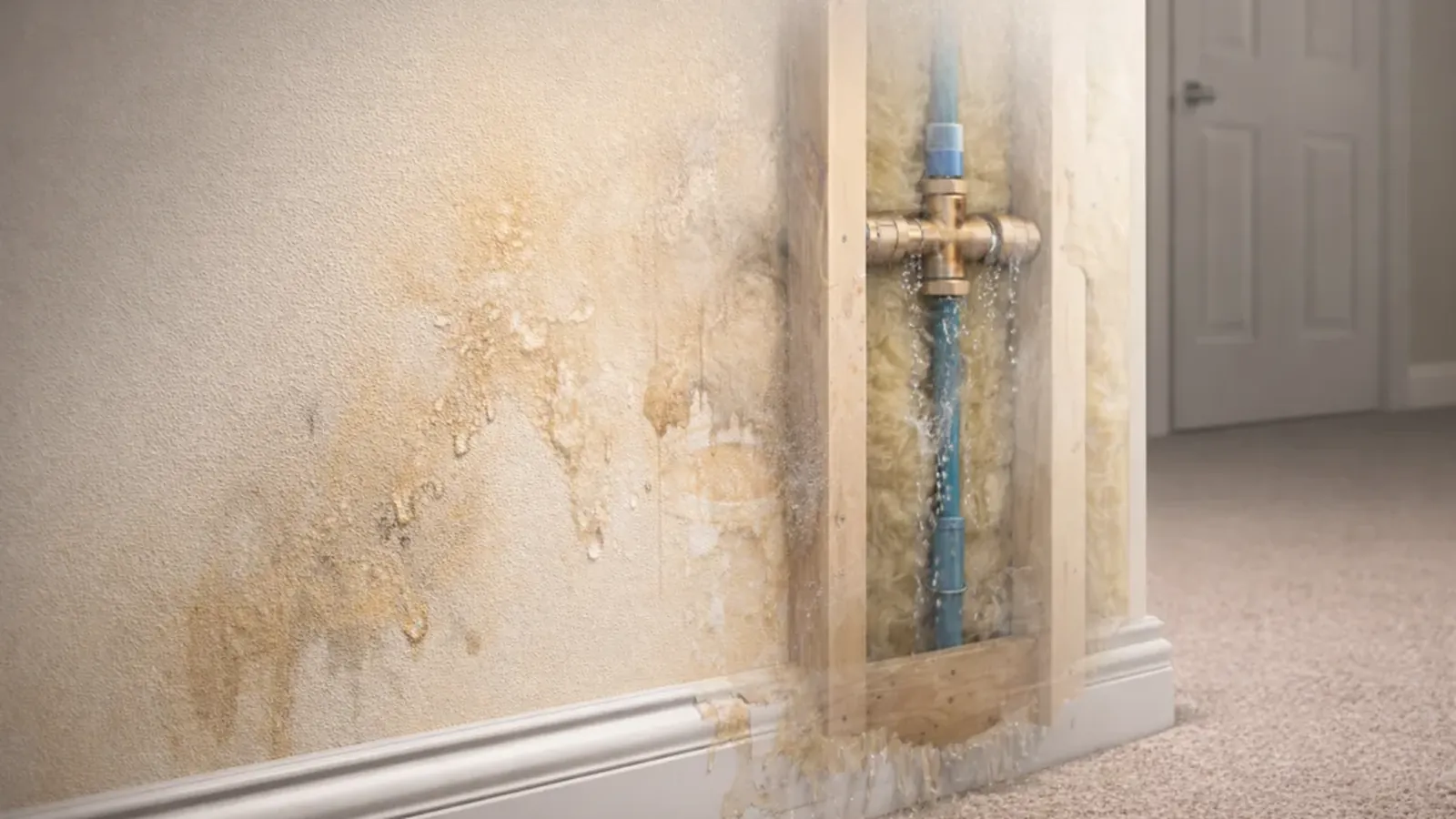
The 5 Warning Signs
A household water bill that climbs quarter-over-quarter without a change in habits is one of the earliest indicators of a hidden leak. Even a 2 L/hr pinhole leak adds up to roughly 48 litres per day — nearly 4,400 litres over a 90-day billing period. Check your SA Water usage history online and compare the same quarter year-over-year. A significant increase without explanation warrants investigation.
If your shower or taps feel weaker than they used to — and the issue isn't limited to one fixture — pressure loss across multiple outlets can indicate a leak on the supply side. Water escaping through a crack or failed joint before it reaches your taps reduces the pressure available at the fixture. If your neighbours on the same street don't have the same issue, the problem is almost certainly within your property's pipes.
Discoloured patches on walls or ceilings, paint that's blistering or bubbling, or wallboard that feels soft when pressed are all signs of moisture that doesn't belong there. Pay particular attention to walls adjacent to wet areas (bathrooms, laundry, kitchen), under-stair spaces, and ground-floor walls near the slab edge. In Adelaide's older housing stock, copper pipe failures behind tiles are particularly common and particularly slow to show visible signs.
Surface mould in a steamy bathroom is normal — mould growing on a bedroom wall, under a vanity in a non-shower area, inside a wardrobe adjacent to a wet area, or on a ground-floor ceiling is not. Mould requires a persistent moisture source. If you can't attribute it to condensation or poor ventilation, there's a reasonable chance a slow leak is keeping that area damp.
A section of lawn or garden that stays noticeably greener or wetter than surrounding areas — particularly when you haven't been watering it — often indicates a leak in the underground supply pipe running between your water meter and the house. These slab or sub-soil leaks can run for months without surfacing visibly inside, slowly saturating the ground beneath your home's footings.
The SA Water Meter Test — Do It in 5 Minutes
If you suspect a hidden leak, this simple test will confirm whether water is escaping somewhere in your system. It doesn't tell you where — but it confirms whether to call a plumber.
Turn off all water-using appliances and fixtures. This includes taps, showers, dishwasher, washing machine, irrigation systems, and your hot water system's auto-fill valve. Nothing should be drawing water.
Locate your water meter at the front boundary of your property. Lift the cover and note the current reading. Most meters have a small "leak indicator" — a small triangle or star-shaped dial that rotates with any flow, even tiny amounts.
Watch the leak indicator for 60 seconds. If it moves at all while everything is turned off, water is flowing somewhere it shouldn't. Even very slow movement confirms a leak.
If no indicator is visible, note the reading and come back in 2 hours without using any water. If the reading has changed, you have a leak.
To determine if the leak is inside or outside the home, turn off the internal stopcock (usually under a sink or near the hot water system) and repeat the test. If the meter stops moving, the leak is inside the house. If it continues, the leak is in the supply line between the meter and the house.
SA Water offers a once-per-year leak allowance for property owners who can demonstrate a concealed leak has been professionally repaired. Keep a copy of your plumber's invoice — you can apply online after the repair to receive a credit on the water lost during the leak period.
What Professional Leak Detection Involves
When a meter test confirms a leak but the source isn't visible, our Adelaide plumbers use non-invasive detection methods to locate it precisely before opening any walls or flooring:
- Acoustic listening devices — amplify the sound of water escaping under pressure, allowing the plumber to pinpoint the leak location through concrete slabs and behind wall surfaces
- Thermal imaging — temperature differences caused by escaping water show up as distinct zones on a thermal camera, particularly effective for slab leaks and behind tiled areas
- Pressure testing — isolating pipe sections and pressure testing them confirms which section of pipe has failed without requiring any excavation or wall opening
The goal is always to locate the leak as accurately as possible before any excavation, minimising disruption to floors, tiles, and landscaping.
Suspected Leak in Adelaide? Let's Find It.
Our licensed plumbers use non-invasive detection methods to locate hidden leaks without unnecessary damage to your home. Call us for a same-day assessment.
Call 08 8246 6223 Get a Quote